

As parents, we often think of our children's physical development in terms of crawling, walking, and fine motor skills. But one crucial, and often overlooked, area of development is oral motor control, specifically the strength and agility of the tongue.
Tongue movements, particularly tongue tip lateralization (moving the tongue from side to side) and lifting (raising the tongue tip), are foundational skills that play a vital role in several key areas of a child's life:
-
Speech and Articulation: Precise tongue movements are essential for forming sounds. Think about the "L" sound, the "T" sound, or the "D" sound—all of these require the tongue tip to make contact with the roof of the mouth or the back of the teeth.
-
Feeding and Swallowing: A strong, flexible tongue is necessary to move food around the mouth, form a bolus (a small ball of food), and safely propel it to the back of the throat for swallowing. Difficulty with these movements can lead to picky eating, food refusal, and even choking concerns.
-
Oral Hygiene: The tongue's ability to sweep around the mouth helps to clear food particles from the teeth and gums, contributing to better oral health.
Why Do Some Children Struggle?
Some children may have difficulty with these movements due to a variety of factors, including low oral muscle tone, sensory processing differences, or simply a lack of practice. If a child consistently shows signs of a weak tongue, such as:
-
Picky eating (especially with foods that require a lot of chewing)
-
Messy eating (food falling out of the mouth)
-
Difficulty pronouncing specific sounds
-
Inconsistent or "sloshy" swallowing
...it might be time to consider tools and exercises to help strengthen their oral muscles.
The Role of Oral Muscle Exercisers
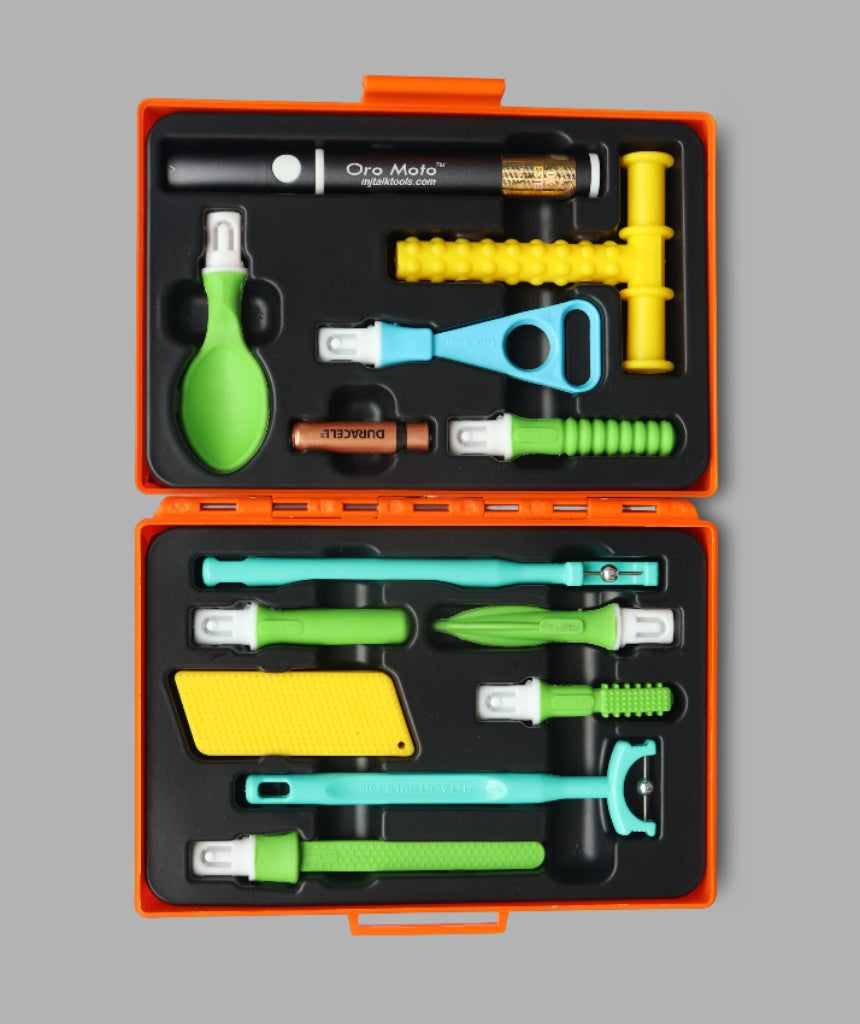
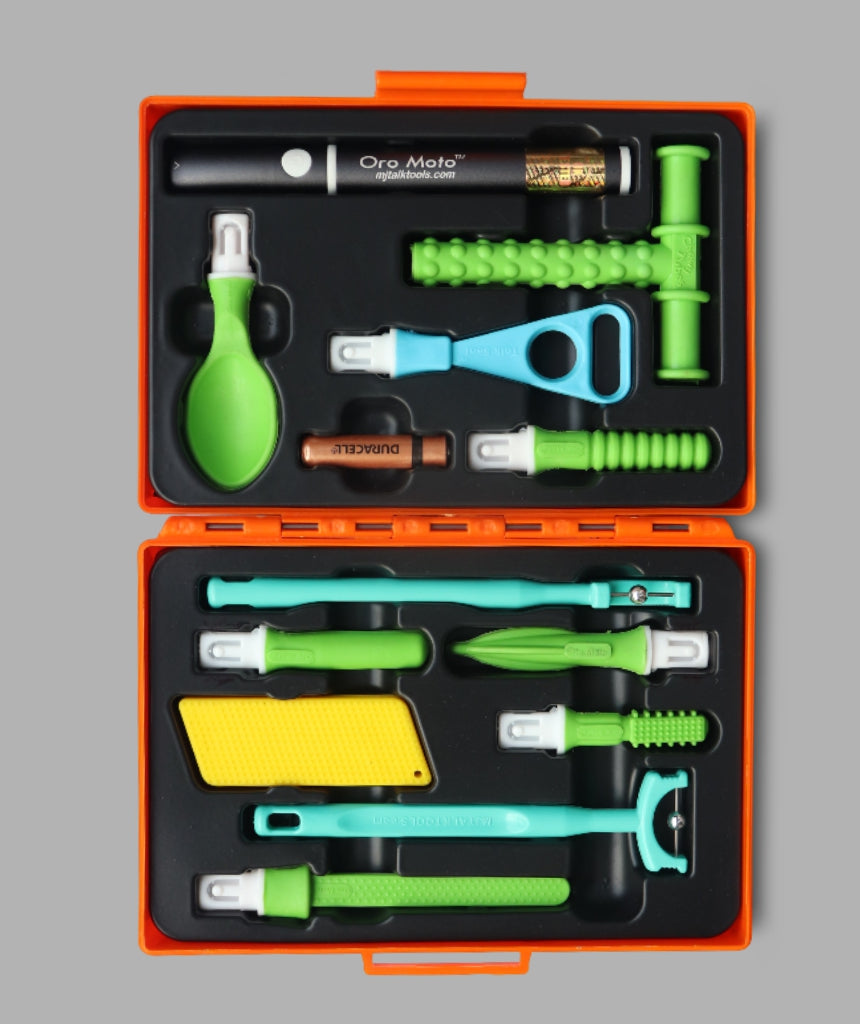
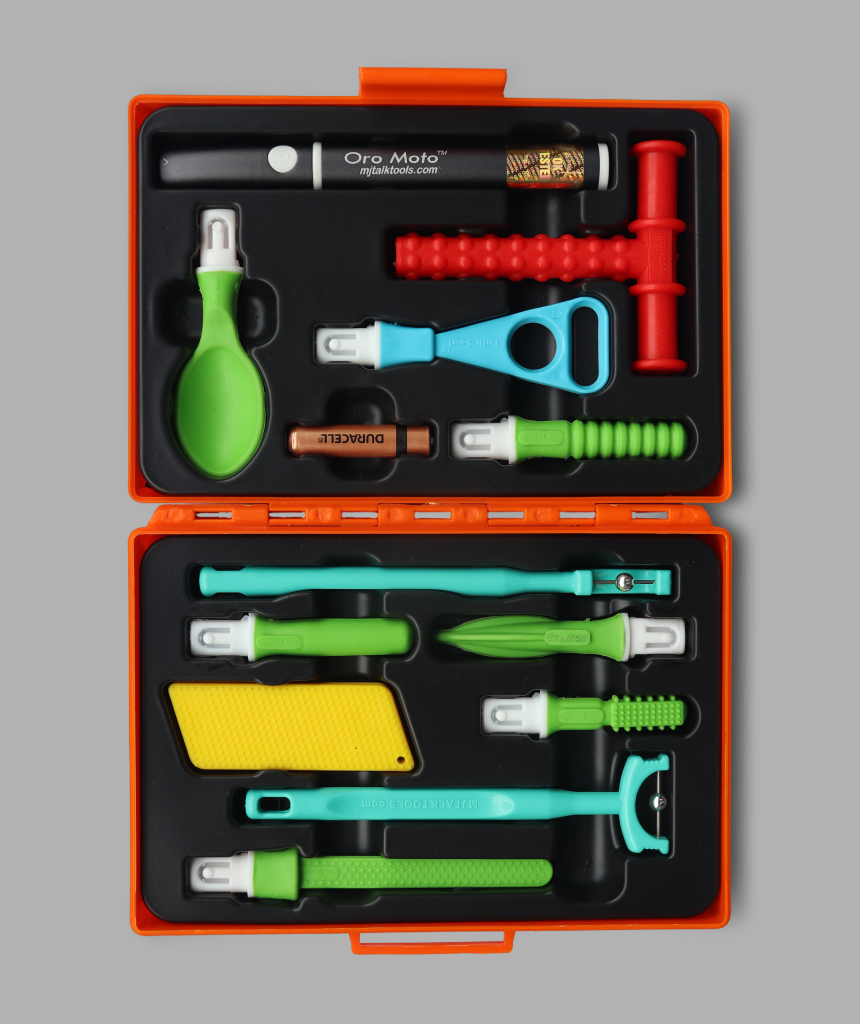
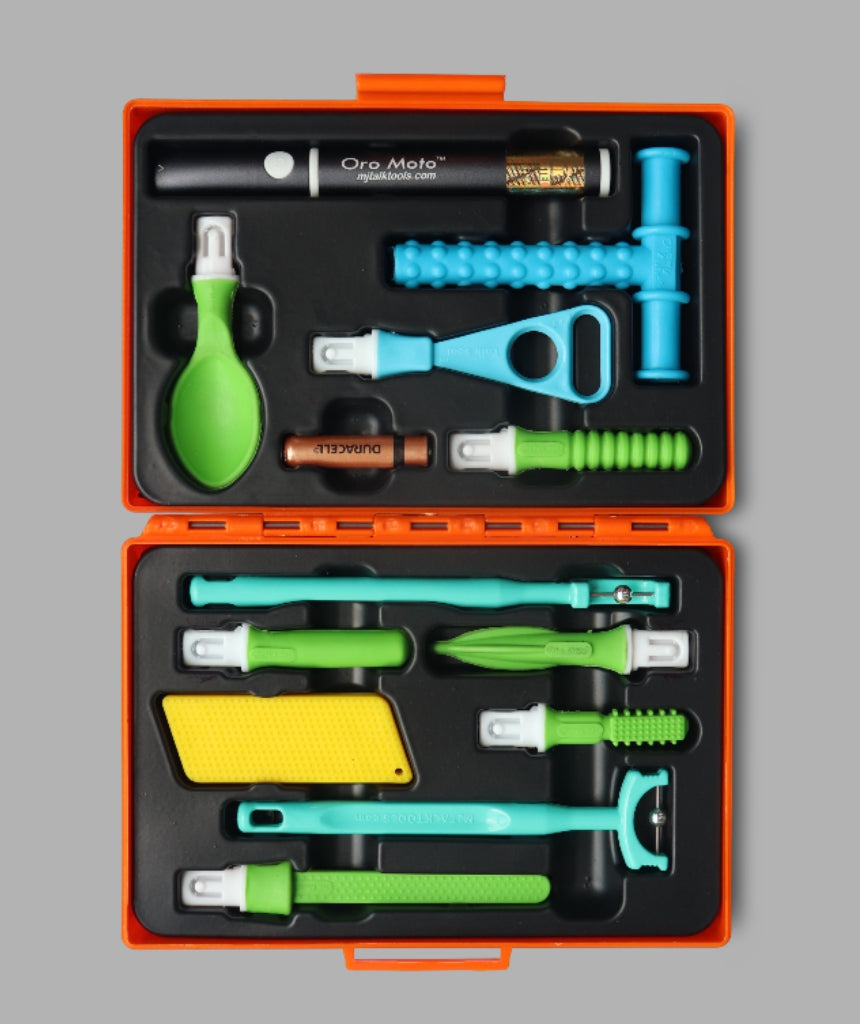
This is where specialized oral muscle exercisers come in. These tools, often recommended by speech-language pathologists (SLPs) and occupational therapists (OTs), are designed to provide a safe and effective way to practice and strengthen specific tongue movements.
These exercisers often come in various shapes and textures, and are used under the guidance of a professional. For example, a therapist might use a tool to:
-
Provide a target for the tongue to reach for, encouraging lateralization (side-to-side movement) as the child tries to "touch" the tool with their tongue tip.
-
Encourage lifting by placing the tool on the upper gums or hard palate, prompting the child to reach up with their tongue.
-
Provide resistance, helping to build muscle strength over time as the child pushes against the tool.
Making It Fun: A Game, Not a Chore
The key to success with these exercises is to make them feel like a game. Therapists are experts at turning these exercises into engaging activities, and parents can replicate this at home. Instead of a "boring" exercise, think of it as a fun challenge! "Can you touch the 'lollipop' on the side?" or "Let's make our tongue reach for the 'star' on the roof of your mouth!"
By understanding the importance of tongue tip lateralization and lifting, and by using the right tools and strategies, we can empower our children to build the foundational oral motor skills they need for clear communication, confident eating, and overall healthy development.
Always consult with a speech-language pathologist or pediatrician if you have concerns about your child's feeding or speech development.
